
Walmart's Nasdaq-100 Snub: A Retail Titan's Reassessment and the Billion-Dollar Gamble on the Horizon
"Walmart's recent exclusion from the Nasdaq-100 is not a mere technicality; it's a stark signal of shifting priorities and strategic recalibration. This decisive move, coupled with analyst target adjustments and impending dividend dates, unveils a critical inflection point for the retail behemoth. The implications extend far beyond the stock price, impacting Walmart's core operations and its ambitious vision for 2026 and beyond, with a heavy emphasis on how its leaders are planning for the future."
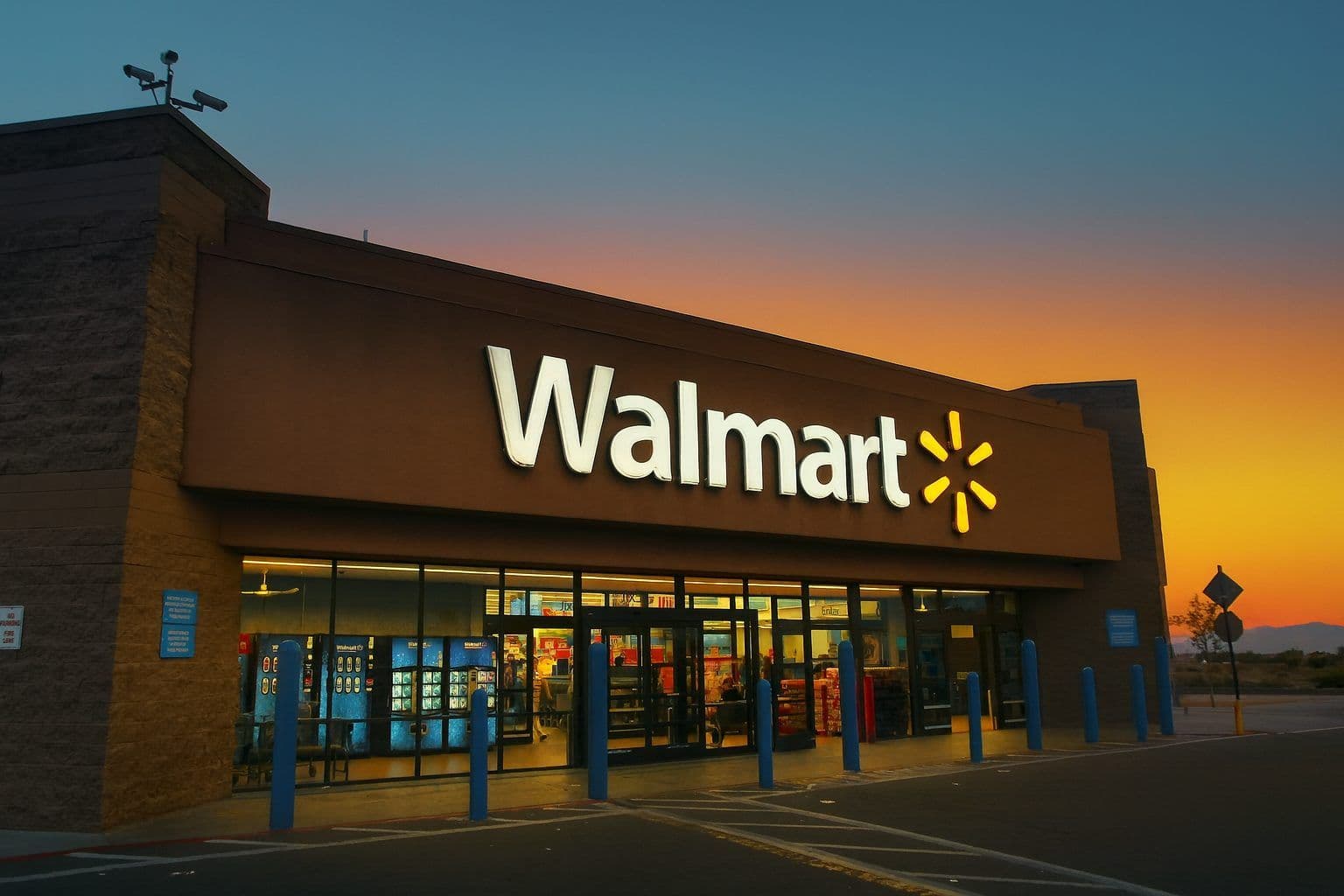
Key Takeaways
- •Walmart's exclusion from the Nasdaq-100 is a signal of strategic recalibration.
- •Analyst targets are mixed, reflecting the challenges and opportunities facing Walmart.
- •The 2026 catalyst is a pivotal date that is critical to the future of the company.
The fluorescent lights of the trading floor hummed, a low thrumming counterpoint to the frenetic energy of a market bracing itself for the next tidal wave. It was a Tuesday, the kind of day that blended seamlessly into the blur of financial cycles, but today felt different. The buzz wasn't about the usual suspects – the tech darlings, the pharma giants. Today, the whispers revolved around Walmart, the behemoth of Bentonville, Arkansas, and its unexpected exile from the Nasdaq-100. This wasn't just a stock market blip; it was a shot across the bow, a declaration of independence, and a bet on a future that looks vastly different than the present.
The Ghost of the Dow and the Nasdaq's New Rules
To understand the gravity of Walmart's situation, one must first appreciate the symbolic power of the Nasdaq-100. It's not just an index; it's a coveted club, a badge of technological relevance, a playground for growth-focused investors. For decades, Walmart, with its brick-and-mortar dominance, has been something of an anomaly in the index, a reminder of the old economy clinging to the coattails of the new. Its exclusion, therefore, carries a profound message: the market is demanding change, a redefinition of value, and a renewed commitment to innovation. It's a harsh reminder that the old guard doesn't always win.
Walmart's history is a case study in disruption. Sam Walton, a true visionary, built an empire on the simple premise of everyday low prices. He mastered logistics, honed supply chains, and, crucially, understood the American consumer. But success, as they say, breeds complacency. The giant's initial foray into e-commerce was tentative, its focus remained primarily on its vast physical retail network. That reluctance to fully embrace the digital revolution is one of the key reasons behind its current position. This moment echoes the struggles of many retail giants who underestimated the disruptive power of online shopping.
Consider the strategic missteps. The delayed investment in e-commerce infrastructure, the struggles to compete with Amazon, the early resistance to embracing technological advancements. Each miscalculation chipped away at Walmart's dominance. Now, with the Nasdaq-100 seemingly drawing a line in the sand, Walmart's leadership finds themselves at a crossroads. They can either continue to be a retail giant that is also a digital player, or they can become a technology and retail company.
The Numbers Game: Analyst Targets and the Dividend Dilemma
The numbers paint a complex picture. Analyst targets are, as always, a mix of cautious optimism and cold-blooded realism. While some firms maintain “buy” ratings, others are lowering their price targets, factoring in the costs of transformation, the intense competition, and the pressure to deliver consistent growth. These adjustments are not merely theoretical exercises; they directly impact the investment decisions of institutions and individual investors, leading to volatility and uncertainty. Wall Street, in its ruthless pursuit of profit, is a blunt instrument, and Walmart's recent performance has caused a collective re-evaluation.
The dividend, a sacred cow for many long-term Walmart shareholders, also comes under scrutiny. The company has a history of consistent dividend payouts, a key factor in attracting income-focused investors. But in the face of the massive investments required to compete in the digital age, the board faces a difficult choice. Can they sustain the dividend while simultaneously funding e-commerce initiatives, supply chain upgrades, and the integration of artificial intelligence into their operations? A reduction, though painful in the short term, might be necessary to ensure long-term viability and growth. This is the crucial balancing act Walmart's leadership must navigate. The cost of retaining and growing market share against digital native competitors is going to be monumental.
The company's leadership is facing tough decisions and is very aware of the implications. Their success will hinge on their ability to execute a multi-faceted plan. This would involve revamping the company culture to become more technology-focused, investing in AI and data analytics, and making strategic acquisitions to bolster its e-commerce capabilities. They must also develop new and innovative strategies for the future of retail, including delivery, customer service, and leveraging the immense data they collect from millions of transactions every day. While many of these are in progress, what is missing is a focused, streamlined, and clearly communicated plan to bring this together into a cohesive strategy.
The 2026 Catalyst: A Vision of the Future or a Mirage?
The year 2026 looms large on Walmart's strategic horizon. That is the targeted date for key initiatives to bear fruit. The company has publicly declared ambitious goals related to supply chain efficiency, e-commerce market share, and the integration of emerging technologies like AI and automation. These are not just internal goals; they are promises made to shareholders, the market, and the world. But are these aspirations grounded in reality, or are they mere window dressing, designed to soothe investor anxieties and deflect criticism? This is the critical question.
The success of these catalysts hinges on several factors. The effective execution of its e-commerce strategy, the successful integration of technology into its retail operations, and its ability to compete against powerful rivals are all central. A failure to deliver on these promises will trigger a sharp decline in the stock price, eroding shareholder confidence and potentially leading to a leadership shakeup. The stakes are immense, and the pressure is palpable. As the race for the next big retail evolution, Walmart needs to have a plan, a strategy, and focus for its next phase of transformation.
Walmart's 2026 plans involve a combination of strategic investments and new technologies. The first, and perhaps most significant, is the refinement of its e-commerce strategy. Walmart has already made progress in this area, but it must continue to invest in improving its website and app, as well as optimizing its delivery and fulfillment capabilities. This includes leveraging AI and machine learning to personalize the customer experience, improve search functionality, and enhance inventory management. Furthermore, the company must work to integrate the online and offline experience, making it easier for customers to shop, regardless of how they choose to shop.
The second key element of Walmart's future is the strategic use of technology throughout the retail process. This means, first, the increased use of automation. Walmart has already been testing robots in its warehouses, and it is likely to expand its use of automation to its stores in the future. Second, it is investing heavily in data analytics and artificial intelligence (AI). This includes using AI to optimize pricing, personalize recommendations, improve supply chain management, and provide better customer service. It must have the infrastructure in place to capture, analyze, and leverage the massive amounts of data generated by its operations.
Finally, Walmart's 2026 plans also include the enhancement of customer service and experience. The company must focus on improving its website and app. At the same time, it should continue to invest in its customer service representatives, provide the best training, and implement programs to improve the overall customer experience. These initiatives are important and may be game-changing for the company.
The Macro View: Reshaping the Retail Landscape
Walmart's struggles and its strategic pivot have broader implications. The retail industry is undergoing a period of profound transformation, driven by shifting consumer preferences, technological disruption, and the relentless rise of e-commerce. The traditional brick-and-mortar model, once the undisputed king, is now forced to compete with online juggernauts like Amazon, as well as an ever-growing number of niche players. The lines between online and offline retail are blurring. Successful retailers are those that can provide seamless shopping experiences, regardless of how or where the customer chooses to buy. Those that fail to adapt will become casualties.
This is not just a battle for market share; it's a battle for survival. Retailers must adapt or risk becoming obsolete. They are forced to invest heavily in technology, supply chain optimization, and personalized customer experiences. Mergers and acquisitions are on the rise, as companies seek to expand their capabilities and gain a competitive edge. This is not simply a contest between big retailers and small retailers; it's a contest between retailers and digital platforms. Walmart is working to develop a winning strategy and is now in a race to transform itself into a technology company.
The fallout from Walmart's re-evaluation will be felt across the industry. Suppliers will be forced to adapt to Walmart's changing demands. Competitors, sensing weakness, will aggressively pursue market share. Investors will reassess their portfolios, shifting their investments away from legacy retailers and toward companies that demonstrate a greater ability to innovate and adapt. The entire retail landscape is in a state of flux, and the pace of change will only accelerate. The retail industry is seeing a renewed period of activity, and the focus is on a new world.
The Verdict: A High-Wire Act with a Cloudy Horizon
In this high-stakes game of retail, Walmart's future hangs precariously in the balance. The Nasdaq-100 snub is a wake-up call, a demand for change that can no longer be ignored. The company's leadership is facing a difficult path, and the pressure is on. Success requires a commitment to innovation, a willingness to make tough choices, and the ability to execute a multi-faceted strategy in an ever-changing environment. This demands a clear-cut plan, a vision for the future, and relentless execution.
1-Year Outlook: The next 12 months will be a crucial test of Walmart's ability to execute its strategic vision. Volatility is inevitable. The stock price may experience ups and downs. The market will closely monitor its progress in e-commerce, supply chain efficiency, and the adoption of new technologies. While I remain cautiously optimistic, the path ahead will be bumpy. The company's response and progress over the next year will shape the future.
5-Year Outlook: Walmart's long-term prospects will depend on its ability to transform itself into a true technology and retail company. It will need to demonstrate consistent growth, expand its e-commerce market share, and develop the retail of the future. The company will need to innovate and adapt continuously. Failure to execute these strategies may result in lower growth and a diminishing role in the market.
10-Year Outlook: Walmart will face increased competition and industry disruption. It must innovate, adapt, and transform itself. The company's ability to survive will depend on its ability to compete in a rapidly changing retail landscape. Those that don't adapt will fail. The question remains: Can Walmart's leadership engineer a transformation of this magnitude? The answer, as always in the financial markets, is waiting to be written.