
Musk's Unsupervised Gamble: Is Tesla's Robotaxi the Dawn of a New Era or a Reckless Ride into the Unknown?
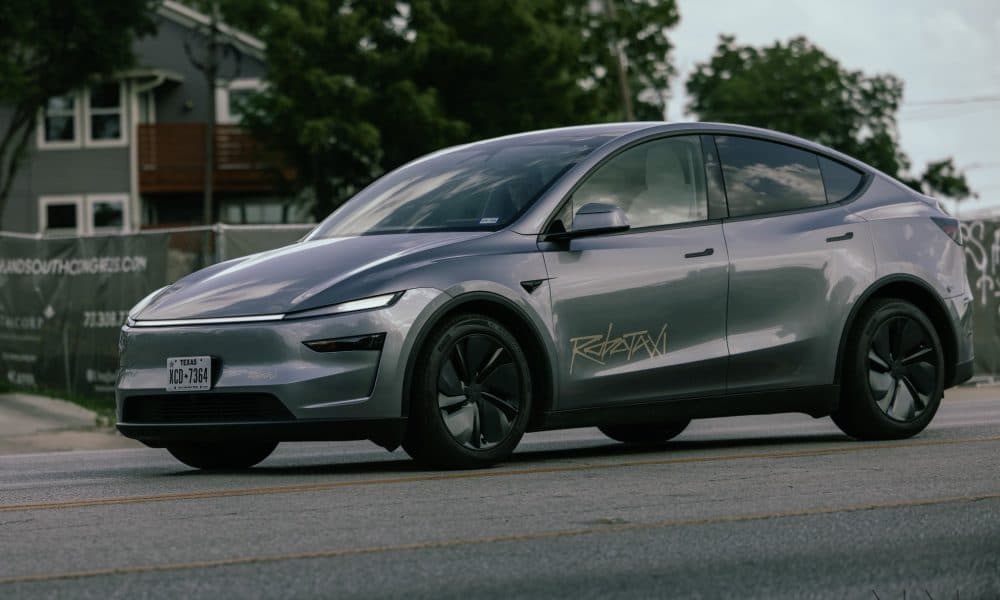
"Elon Musk has just confirmed Tesla's Robotaxi will operate without human supervision – a move that rewrites the rules of the automotive industry. This bold play, fraught with risk, promises to reshape transportation as we know it, while simultaneously opening Tesla up to unprecedented levels of liability and scrutiny. The question isn't *if* this will change everything, but *how*… and whether Musk's vision can survive the inevitable collisions with reality."
Key Takeaways
- •Elon Musk's decision to launch unsupervised Robotaxi services is a high-stakes gamble with potentially massive rewards and risks.
- •Tesla faces significant challenges including regulatory hurdles, legal liabilities, technological complexities, and fierce competition.
- •The move has the potential to reshape the automotive industry and urban landscapes, but success is not guaranteed.
The Lede: Asphalt Dreams and Algorithmic Terror
The desert sun beats down on the desolate Nevada proving grounds. Dust devils dance across the blacktop, mirroring the swirling vortex of speculation engulfing Silicon Valley. Here, in the crucible of innovation, a singular decree has been issued: Elon Musk's Tesla Robotaxi will soon shed its training wheels. Unsupervised. Driverless. A future, once relegated to the realm of science fiction, is hurtling towards us at 75 miles per hour. This isn’t just an incremental step; it's a quantum leap, a high-stakes gamble with the potential to either cement Musk’s legacy as a visionary or, equally plausibly, to initiate a catastrophic financial and reputational unraveling.
Imagine, if you will, the scene. The year is 2026. You hail a Tesla Robotaxi. No driver, just a sleek, silent pod gliding towards your destination. The algorithms – the gods of this new mechanical pantheon – are in control. The promise? Effortless, affordable, and, of course, ‘safe’ transportation. The reality? Still unwritten. The legal battles? Already brewing. The insurance premiums? Astronomical. The potential for disaster? Limitless. Musk, ever the showman, has again taken center stage, orchestrating a narrative that oscillates between utopian fantasy and stark, chilling reality.
The Context: The Long and Winding Road to Autonomy
To understand the magnitude of this announcement, one must rewind. Consider the genesis of this ambition. The seeds were sown in the early 2010s, amidst the tech boom and the rise of disruptive innovation. Tesla, initially focused on electric vehicles, soon realized the potential of autonomous driving, recognizing it as a critical pillar of future value. The promise of self-driving cars was, and remains, a siren song, luring investors, regulators, and consumers alike.
Initially, Tesla’s approach was aggressive, betting heavily on its “Autopilot” and “Full Self-Driving” (FSD) software. The company promised rapid advancements, frequently adjusting timelines and expectations. This was a classic Musk strategy: Overpromise, overdeliver (sometimes), and galvanize the fan base. But this path has been riddled with setbacks. Crashes, lawsuits, and regulatory scrutiny have plagued Tesla's self-driving initiatives. Early iterations of Autopilot were notorious for erratic behavior, and the FSD software, despite its name, remained firmly in the beta phase, requiring constant human supervision.
The early years saw Tesla pursuing a vision of 'pure vision' - relying solely on cameras and neural networks to navigate. This was in stark contrast to competitors such as Waymo (Google's self-driving division) and Cruise (GM's autonomous vehicle subsidiary) that incorporated lidar technology, which uses lasers to map the environment. While lidar offered increased accuracy and redundancy, Musk dismissed it as an expensive and unnecessary crutch, staking his claim on the superior processing power and learning capabilities of his in-house designed neural nets. This was the opening shot in what would become a tech industry battle royale over the future of autonomy, a fight built on both technical prowess and ideological differences.
The relentless pursuit of unsupervised autonomy has been driven by several factors. First, the profit motive. Driverless fleets promise to unlock a treasure trove of revenue, eliminating the cost of human drivers, optimizing vehicle utilization, and transforming the automobile industry into a subscription-based service. Second, the ambition to maintain technological dominance. Musk understands that being first to market with truly autonomous vehicles provides a significant competitive advantage. Third, and perhaps most crucially, the narrative itself. Musk's mastery of public relations and his ability to cultivate a loyal following are key. The promise of fully autonomous vehicles is a powerful marketing tool, shaping the brand's image and driving demand for Tesla's cars.
The Core Analysis: Numbers, Risks, and the Unseen Hand
The decision to launch an unsupervised Robotaxi service is a strategic masterstroke, albeit one that is inherently risky. The financial implications are staggering. Consider the potential revenue streams: ride-hailing services, charging stations, and even insurance offerings. Tesla aims to become a vertically integrated transportation behemoth, controlling every aspect of the customer experience, from vehicle manufacturing to the ride itself. But the risks are equally colossal.
The Legal Minefield: The legal landscape is uncharted territory. Who is liable when a driverless car is involved in an accident? Is it Tesla? The software provider? The owner? Existing laws were not designed for fully autonomous vehicles. The inevitable lawsuits will be numerous, complex, and potentially ruinous. Insurance costs will skyrocket, placing further strain on the company's profitability and adding complexity to the overall deployment strategy.
The Technological Hurdles: While Tesla's engineers have made significant progress, true autonomy remains a formidable challenge. The ability to handle unexpected events, navigate complex urban environments, and respond appropriately to human behavior demands a level of sophistication that is still being developed. The potential for software glitches, hardware failures, and unforeseen circumstances is a constant threat. Moreover, the public’s trust is incredibly fragile. One catastrophic incident could severely damage the brand's reputation and derail the entire project.
The Competition: Tesla isn't alone in this race. Waymo and Cruise, with their existing fleets and robust technology, are formidable rivals. These companies have invested heavily in lidar and other sensor technologies, which could give them an edge in safety and reliability. They also have experience operating autonomous vehicles in real-world conditions, which offers them significant advantages over the competition. The race to autonomy is a battle of attrition, and only the best prepared can survive.
The Musk Factor: No analysis of Tesla can be complete without considering the influence of Elon Musk. Musk is a visionary, but he is also a controversial figure. His pronouncements are often bold, sometimes unsubstantiated. His decisions are made with rapid-fire speed, leaving his company’s stock and reputation constantly on a roller coaster ride. His leadership style, while effective for some, has also been criticized as being too autocratic and prone to overconfidence. His ability to navigate this new era will be critical, because he will be held responsible if something goes wrong.
The Hidden Agendas: There are always hidden agendas in business, and in this case, a compelling one to consider. Tesla needs to maintain its lead in the electric vehicle market, but the competition is heating up. Unsupervised Robotaxis offer a unique way to generate massive amounts of data about real-world driving conditions, allowing Tesla to rapidly improve its software. It is a win-win: The public gets a faster deployment of self-driving and Tesla gets to build a better AI.
The Macro View: Reshaping the Automotive Landscape
The impact of Tesla’s move extends far beyond its immediate bottom line. If successful, unsupervised Robotaxis will have a ripple effect across the entire automotive industry, transforming the way we live, work, and move. The implications are profound.
The Demise of Car Ownership?: Could it be that the concept of car ownership is on its last legs? A future where people simply summon a driverless vehicle when needed will fundamentally alter the economics of transportation. The cost of owning a car—depreciation, insurance, maintenance—will become a burden of the past. Tesla's business model would move from selling cars to selling a transportation-as-a-service model, a transition that will require a complete overhaul of the current market.
Urban Planning Revolution: Autonomous vehicles could revolutionize urban planning. Cities could become more efficient, with less need for parking and more space available for parks, housing, and other amenities. Traffic congestion could be reduced, and accidents could decrease dramatically. The impact on real estate values alone is going to be immense.
The Rise of New Industries: A world of driverless vehicles will birth new industries and disrupt existing ones. Ride-hailing companies will evolve. Insurance companies will be forced to adapt. New businesses will emerge to cater to the needs of the passengers of the future, such as on-demand food delivery, entertainment services, and remote work solutions.
The Human Factor: The transition to a driverless future raises many questions about the human workforce. What will happen to taxi drivers, truck drivers, and delivery personnel? The economic and social implications of mass job displacement are significant. The shift could create new opportunities for people to be employed in different sectors, such as maintaining and repairing driverless vehicles and managing the data they generate. But the transition won’t be easy, and it is going to need a lot of planning.
The Verdict: A Brave New World, Braced for Impact
Musk’s move into unsupervised Robotaxis is reminiscent of the pivotal moment in 1997 when Steve Jobs returned to Apple, promising radical change and sparking a revolution in personal computing. This announcement, too, is a crossroads. It marks a moment when an industry is being redefined.
1-Year Outlook: Expect intense regulatory scrutiny. Lawsuits will be filed. There will be inevitable setbacks, software glitches, and perhaps even accidents. The narrative around Tesla will be one of both triumph and crisis. The stock price will fluctuate wildly.
5-Year Outlook: If Tesla can navigate the legal, technological, and reputational minefields, the Robotaxi service will begin to gain traction in select markets. We will see early adoption in certain areas. Competition from Waymo and Cruise will intensify, forcing a relentless arms race of innovation. The automotive landscape will be forever transformed. Tesla will have either succeeded or will be fighting for survival.
10-Year Outlook: If Musk and Tesla triumph, driverless vehicles will be commonplace. Car ownership will be obsolete in many major cities. Transportation will be a subscription-based service, and the economic benefits will be distributed unevenly. The world will be a different place, and Tesla will be its dominant player. If Tesla fails, the legacy of Elon Musk may be remembered as a daring, but ultimately disastrous, gamble on the future. And a whole lot of people will be wishing they had invested in seatbelts.
The future of transportation has arrived, and it is here to stay. Buckle up. The ride is going to be anything but boring.