
Jensen Huang's Billion-Dollar Gamble: Is Suffering the Secret Weapon for NVIDIA's AI Domination?
"NVIDIA's meteoric rise is built on cutting-edge technology and, according to CEO Jensen Huang, a philosophy of embracing hardship. This isn't just a quirky CEO's mantra; it's a strategic underpinning for a company battling for dominance in the trillion-dollar AI market. Prepare to uncover the hidden cost of Huang's relentless pursuit of greatness, and what it means for the future of technology and global power."
Key Takeaways
- •Jensen Huang’s belief in the transformative power of 'suffering' as a key driver of NVIDIA's innovation and success.
- •The financial implications of NVIDIA's aggressive R&D investments and its impact on the company's valuation and market dominance.
- •The strategic use of a high-pressure, competitive culture within NVIDIA to foster innovation and drive employee performance.
- •The potential risks and ethical considerations associated with NVIDIA's business practices and its growing influence in the AI landscape and the future of technology.
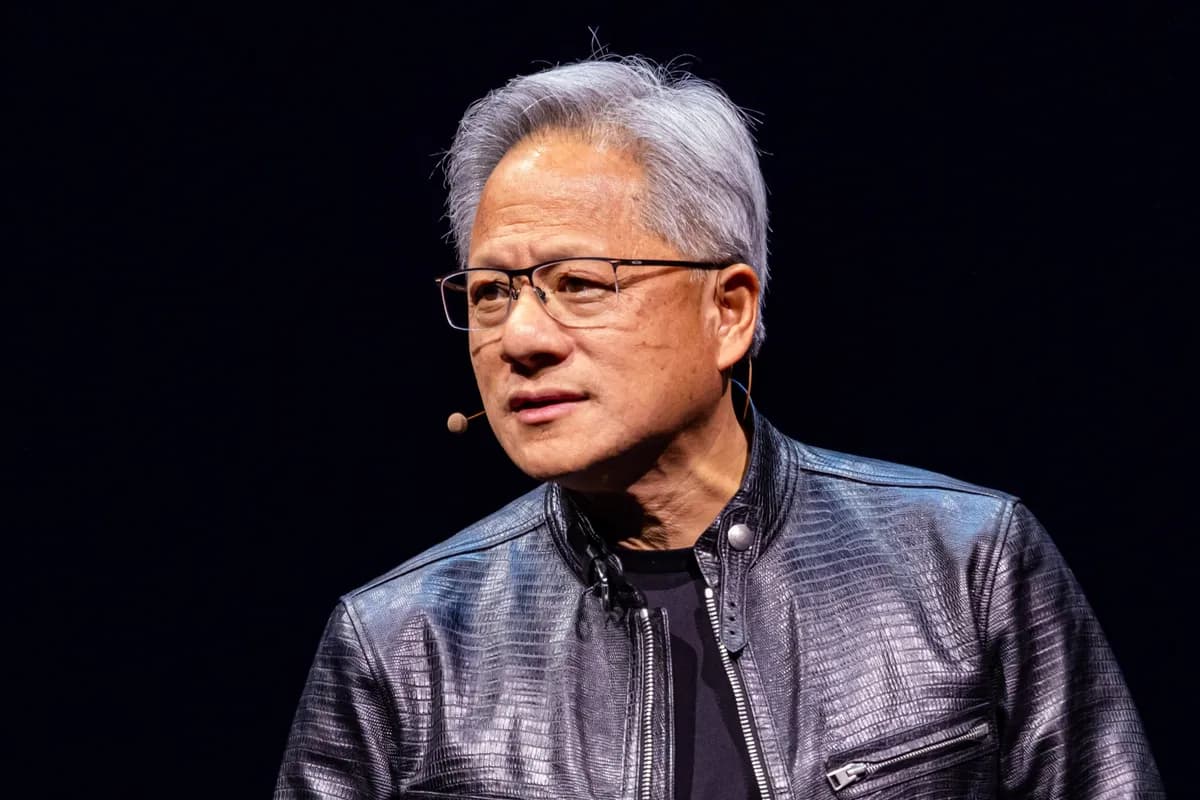
The air crackles with anticipation. A packed auditorium, hushed whispers, and the low hum of anticipation as the spotlight fixates on the stage. It's not a rock concert, but the unveiling of NVIDIA's latest technological marvel. Standing center stage, radiating an almost manic energy, is Jensen Huang. His signature leather jacket gleams under the bright lights, a symbol not just of personal style, but of a company built on the crucible of relentless pressure and unwavering ambition. The recent Centennial Award honoring Huang from Automotive News isn't just a trophy; it's a testament to a career defined by pushing boundaries and embracing, as Huang himself often puts it, the transformative power of 'suffering'. But is this just a motivational speech, or the cold, calculated strategy of a tech titan?
The Genesis of a Titan: From Startup to Superpower
NVIDIA's journey wasn't paved with gold. Founded in 1993, the early years were a struggle. The company initially focused on graphics cards, a niche market overshadowed by established giants. Financial instability, technological setbacks, and the constant pressure to innovate defined the company’s formative period. Huang, the co-founder and CEO, infused the company with a culture of unrelenting persistence. This culture, arguably, is rooted in his belief in the power of 'suffering'. He frequently recounts stories of the early days, of sleepless nights, intense competition, and the constant fear of failure. These trials, he asserts, were not merely hurdles but the very forge in which NVIDIA's success was crafted.
This philosophy has manifested in the company's aggressive, almost relentless, drive for innovation. The focus shifted from merely producing graphics cards to pioneering the field of AI and deep learning. This transition didn't happen overnight. It was the result of massive investment, high-risk bets, and a relentless pursuit of groundbreaking technology. This commitment to innovation is where the 'suffering' aspect becomes crucial. It's the willingness to endure setbacks, to push beyond comfort zones, and to gamble everything on a vision of the future. The transformation of NVIDIA into a dominant player in the AI landscape is a testament to this strategy.
The Algorithm of Adversity: How Huang's Philosophy Fuels Innovation
Huang's perspective isn't just about enduring hardship; it's about leveraging it. For NVIDIA, this means a culture that values relentless testing, iterative development, and a willingness to fail fast. Internal emails, company culture documents, and former employee interviews reveal a demanding, highly competitive environment where perfection is the benchmark and every project is a high-stakes game. This 'suffering' is meticulously orchestrated and strategically employed to optimize for innovation and output.
The financial implications of this approach are staggering. NVIDIA invests billions annually in research and development, constantly pushing the boundaries of what's possible in chip design and AI software. This high-stakes game, in which massive investment is made into R&D and human capital, is possible because of the corporate culture. Consider the rise of CUDA, NVIDIA's parallel computing platform. It wasn't an overnight success. It was the result of years of dedicated effort, countless iterations, and a willingness to take risks. CUDA, which has enabled NVIDIA to dominate the AI processing market, is the direct outcome of the culture that Huang cultivated from the beginning. It's not just about building better chips; it's about building an entire ecosystem, a complete 'full-stack' AI solution that has locked in customers. This creates a moat of complexity that is difficult for competitors to cross, and it's a direct result of the pressure that Huang puts on the entire ecosystem.
NVIDIA’s stock performance tells its own story. Over the past decade, the stock has soared, fueled by the demand for its GPUs in AI applications. The market capitalization of NVIDIA is now in the trillions, making Huang one of the richest men in the world. This wealth, however, is not just a personal victory; it is the fuel that further drives Huang's ambitions. It allows for more investment, more risk-taking, and further expansion into new markets like autonomous vehicles, robotics, and the metaverse. The cycle of 'suffering' and innovation is thus perpetuated, fueled by financial success.
Decoding the Strategy: More Than Just Hard Work?
The core of Huang's strategy goes beyond merely enduring difficulty. It's a calculated effort to create a high-pressure environment where innovation thrives. The culture encourages internal competition, which in turn fosters a relentless drive to outperform. This intense pressure creates a Darwinian ecosystem within the company, where only the most adaptable and resilient can survive, driving innovation and output in the process. It's a system designed to extract maximum effort from employees, pushing them to their limits, and, according to Huang, to their greatest potential. This, however, is not without its ethical implications.
Critics argue that such an intense work environment can lead to burnout, employee turnover, and potentially, a stifling of creativity. The company’s response has been to provide employees with high compensation and significant stock options, tying their success directly to NVIDIA's performance. The trade-off is clear: intense pressure in exchange for the chance to become incredibly wealthy. It's a strategy that has proven effective, as NVIDIA continues to attract and retain top talent. However, the true cost of this strategy has the potential to become a long-term problem for the company.
The 'So What?' Factor: Why This Matters to You
Huang's approach isn't just a corporate case study; it's a window into the future of technology and the global power dynamics that will shape it. NVIDIA's dominance in the AI space gives it immense power. Its technology is at the heart of the most transformative technologies of our time, from self-driving cars to medical research to the development of the metaverse. This dominance is not simply about producing chips; it's about controlling a critical infrastructure of the future. This control comes with a degree of influence that extends far beyond the tech sector, impacting government policy, economic stability, and even international relations.
The concentration of power in a single company, fueled by a specific management philosophy, raises significant questions. Is this level of control beneficial for society? Does the relentless pursuit of innovation come at too high a cost? The answers are complex and multifaceted, with profound implications for the future.
The Future: A Battle for AI Supremacy
Looking ahead, NVIDIA faces an increasingly competitive landscape. Companies like Intel, AMD, and a host of startups are vying for a piece of the AI pie. Competition is not just about technology; it's also about talent, partnerships, and access to resources. Huang's strategy of 'suffering' and relentless pursuit of innovation will be tested like never before. The company's ability to retain its competitive edge will depend on its capacity to not only innovate but also to adapt to a changing world.
The company will need to balance its aggressive, demanding culture with a commitment to employee well-being and ethical considerations. The scrutiny it faces from regulators and the public will only intensify. The stakes are immense. The battle for AI supremacy is not just a technological race; it's a battle for the future of the global economy and the balance of power. Jensen Huang and NVIDIA are at the vanguard of this epic struggle, and the outcome will shape the world for decades to come.
NVIDIA's long-term trajectory depends on several factors. First, their capacity to innovate and maintain their technological lead is absolutely crucial. Continued investment in R&D, and the ability to attract and retain top talent will be critical. Second, the ability of NVIDIA to navigate the ever-shifting geopolitical landscape is equally important. Regulations, trade disputes, and international competition will all pose challenges. NVIDIA must adapt and evolve in order to remain a leading force. The last factor is their ability to address the ethical implications of their work. The AI technologies NVIDIA develops, have the power to fundamentally alter society. Navigating these difficult ethical considerations while remaining competitive will be crucial to their long-term success. NVIDIA's future is a story still being written, and the next chapter promises to be even more compelling than the last.