Diversified's $1.18 Billion Oklahoma Gambit: ABS, No Equity, and the Future of Gas
"Diversified, in a move that has sent shockwaves through the energy sector, has orchestrated a $1.18 billion deal in Oklahoma, funded through Asset-Backed Securities (ABS). The absence of an equity raise raises significant questions about the company's long-term strategy and the underlying health of its assets. This audacious play could either be a masterstroke of financial engineering or a prelude to a high-stakes reckoning, and only the next few quarters will tell."
Key Takeaways
- •Diversified's $1.18 billion Oklahoma gas deal, funded by ABS, raises questions about long-term strategy.
- •The absence of an equity raise signals potential risks and increased leverage.
- •The deal's success hinges on gas prices, production, and Diversified's execution, influencing the industry's future.
The Lede: Where Fortunes Are Forged and Futures Are Written
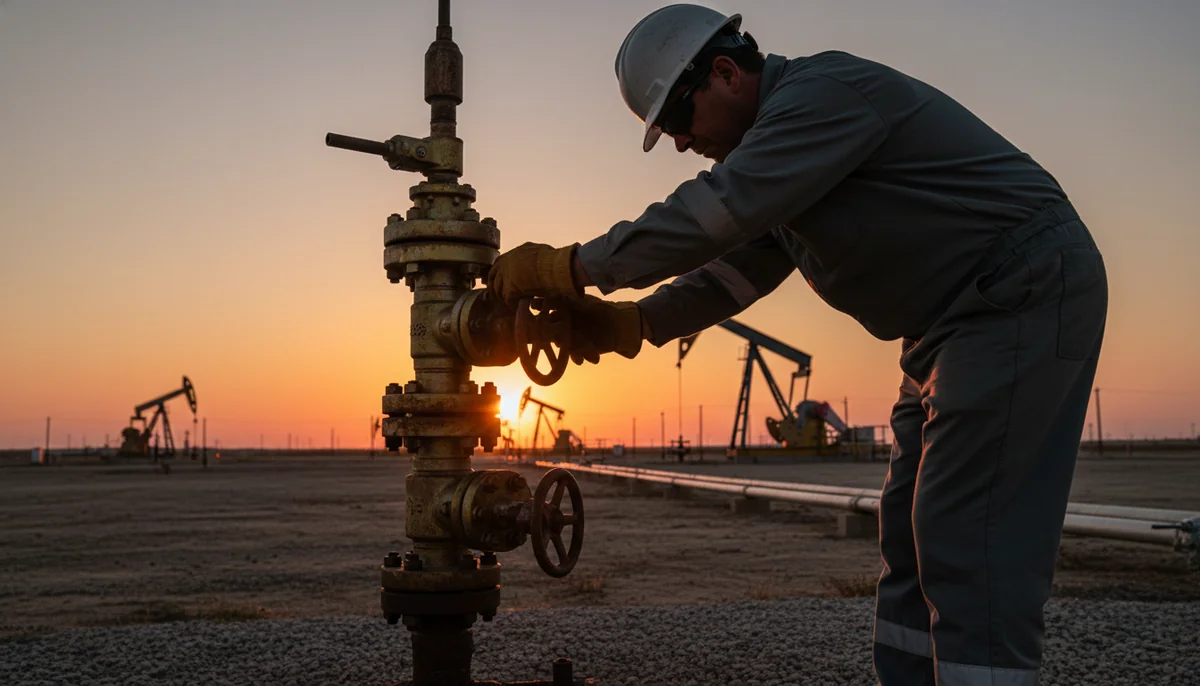
The Oklahoma sun, a malevolent orange eye, beat down on the dusty plains. It was a typical Tuesday, the kind where deals are hatched, fortunes are made, and reputations, for better or worse, are etched in the unforgiving annals of Wall Street. In the cavernous, mahogany-paneled offices of Diversified, a different kind of heat was brewing, one that had nothing to do with the summer scorch. This was a firestorm of financial maneuvering, a carefully choreographed dance of debt and assets, played out on the unforgiving stage of the energy market. Today's headline: Diversified had just inked a massive $1.18 billion deal in the Oklahoma gas fields, not through a traditional equity raise, but through the labyrinthine world of Asset-Backed Securities (ABS).
The implications, like ripples in a pond, were already spreading outwards, touching investors, competitors, and the very fabric of the industry. This wasn't just a deal; it was a statement. A declaration of intent. And, depending on your perspective, a siren song or a ticking time bomb. The silence in the wake of the announcement was broken only by the low hum of the servers, furiously calculating, and the whispered conversations of analysts, each trying to decipher the true meaning of the message Diversified was sending. Was this a sign of strength or desperation? A bold move or a reckless gamble? The answer, as always, lay buried deep within the fine print, the complex financial instruments, and the murky motives of the players involved.
The Context: Echoes of the Past, Whispers of the Future
To understand the magnitude of this move, we must rewind the tape. Diversified, led by a CEO known for his aggressive deal-making and a penchant for risk, has always walked a tightrope. Their history is littered with bold acquisitions, shrewd asset plays, and moments of breathtaking audacity. This is a company built on the premise that value can be conjured from the earth and, more importantly, from the intricate dance of capital markets. Their past is a roadmap of acquisitions, of drilling rights, and the ever-present shadow of cyclical commodity pricing.
Think back to the early 2000s, when energy prices were surging. Diversified, like many of its peers, rode the wave, fueled by readily available credit and an insatiable appetite for growth. They expanded, they diversified, and they built an empire. Then came the bust. The price of oil plummeted. Debts piled up. The whispers of 'restructuring' and 'bankruptcy' echoed through the canyons of the financial district. The company survived, but the experience left scars. It forced them to become more sophisticated, more cautious… or so we thought. This current deal suggests a return to the ethos of the early 2000s, but with a new and potentially more perilous twist. Diversified is wagering big on its existing assets.
This moment has echoes of the late 90s dot-com boom. The market is awash in liquidity, investors are eager for yield, and the perceived risk is low. But, like that era, the fundamentals are often overlooked. The details, the true cost of money, the long-term viability of the underlying assets — these are the questions that will ultimately determine the success or failure of this audacious gamble.
The Core Analysis: Unpacking the Deal – Money, Assets, and the Hidden Hands
Let's dissect this deal. $1.18 billion. That's a significant sum, even in the multi-billion-dollar world of energy. The fact that it was funded via ABS is the key element here. ABS, in layman’s terms, is a financial instrument where a company bundles its assets – in this case, the rights to extract gas in Oklahoma – and sells them to investors. The investors then receive payments from the revenue generated by those assets. The structure is complex, often involving special purpose vehicles (SPVs) and layers of debt, but the fundamental principle is simple: monetize the future cash flow of the assets today. And this is where the red flags begin to multiply.
The absence of an equity raise is the elephant in the room. A traditional equity raise would involve selling shares of the company to investors, diluting existing shareholders but injecting fresh capital. It would signal confidence in the long-term prospects of the company. However, an ABS deal sidesteps this process. It doesn't dilute existing shareholders, but it also doesn't provide the same cushion of capital. It’s pure leverage. It is a sign that the company is either unwilling to dilute its equity, or it has tested the market's appetite for an equity raise and found it wanting. The implications here are staggering.
Consider the potential downsides. ABS deals are inherently riskier than equity raises. The value of the ABS is directly tied to the performance of the underlying assets. If the price of gas falls, or production declines, the investors in the ABS will be the first to feel the pain. Further, the debt from this ABS deal increases Diversified's leverage. Any missteps, any unexpected maintenance issues, or even a modest downturn in the energy market, and Diversified could find itself teetering on the edge of a financial precipice. This increased risk profile could also affect Diversified’s credit ratings, making it more expensive to borrow money in the future.
Who benefits? Initially, Diversified. They get a large influx of cash to fund their Oklahoma expansion. They can deploy this capital to increase production, acquire more assets, or pay down existing debt. The investors in the ABS also benefit, provided the deal performs as expected. They receive a yield, a return on their investment. But the ultimate winners and losers remain to be determined. If the price of gas soars and production surges, everyone wins. But if the market falters, or if Diversified's execution falters, the investors could lose a substantial portion of their investment and Diversified itself will be burdened by debt and a diminished ability to weather market storms. There is also the matter of fees. Who benefits from structuring and selling the ABS? Investment banks, of course. This deal will funnel millions in fees. These aren’t just dollars and cents. These are power plays.
We must also look at the Oklahoma gas fields themselves. What is the quality of the assets? How long can they produce at current levels? What are the operating costs? What are the potential environmental liabilities? These are all critical questions that determine the long-term viability of this deal. Without a thorough understanding of the assets, the deal is nothing more than a glorified bet.
The 'Macro' View: Reshaping the Landscape of Gas
This deal doesn't just impact Diversified; it reverberates across the entire energy sector. It's a signal to competitors, to investors, and to the wider market. It sets a precedent. If this ABS structure proves successful, we could see a wave of similar deals. Companies struggling with debt or seeking to accelerate growth will be tempted to follow suit. This could unleash a flurry of activity, driving up asset prices and further complicating the already volatile energy market. It could also lead to a dangerous over-leveraging of the industry, creating the potential for a catastrophic collapse if the market turns. This deal’s success or failure will significantly influence the near term future of energy production financing.
On the other hand, if Diversified struggles, it could have a chilling effect. Investors will become more cautious, and the cost of capital for the energy sector will increase. This would make it harder for smaller companies to compete and could accelerate industry consolidation. It could also lead to a renewed focus on equity financing, and a more cautious approach to debt. This deal will further complicate the environmental issues of gas production as a result.
This deal also brings into sharp relief the ever-present forces of the energy market. The impact on production, pricing, and the political currents surrounding the ongoing debate about natural gas's role in the global energy transition will be significantly changed by this deal.
The Verdict: Crystal Ball Gazing – A Prediction
So, where does this all lead? My seasoned perspective, the accumulated weight of decades spent witnessing the rise and fall of fortunes in this industry, tells me this is a high-wire act. Diversified has made a bold bet. The next 12 months will be critical. The company will need to execute flawlessly. It will need gas prices to remain stable or, ideally, increase. And it will need to navigate the ever-shifting regulatory landscape with precision. If they succeed, this deal will be lauded as a masterstroke, a testament to their financial engineering prowess. If they fail… the consequences could be severe.
**1-Year Outlook:** Expect volatility. Expect scrutiny. Diversified will be under the microscope. Every production report, every earnings call, will be dissected by investors and analysts. The company's stock price will likely be subject to wild swings. The success or failure of the deal will be determined by the market, as much as by the company itself. The price of gas, political decisions regarding energy, and global demand will all have a huge impact on this deal.
**5-Year Outlook:** This is where the long game comes into play. If Diversified navigates the next 12 months successfully, it will have the resources to expand its operations and solidify its position in the market. It will likely face pressure from regulators, as environmental concerns grow and demands for sustainability increase. Success here will depend on its ability to evolve, to adapt to new technologies, and to anticipate market trends. The company will likely need to adjust its debt load, by possibly tapping into equity markets again. The long-term viability of its assets will become evident as new discoveries or a decline in production comes to light.
**10-Year Outlook:** The energy landscape will look fundamentally different. The global energy mix will likely be in a transition, with a greater emphasis on renewable energy. Diversified, or what remains of it, will need to have adapted. The long-term future of this deal is uncertain. It depends on too many factors, from technological breakthroughs to global political developments. However, if Diversified plays its cards right, its Oklahoma gas assets could still be generating cash flow, if it is still a viable player. The core fundamentals of economics will still exist. If the company is smart it will weather the coming storms of political and economic change.
This is a story with an ending yet to be written. The narrative is complex, and the stakes are enormous. But one thing is clear: the Oklahoma gas deal is a pivotal moment in the energy sector, and a defining moment for Diversified. The clock is ticking, and the future hangs in the balance.