Billionaire Profile
Vinod Khosla
Global Rank
#230

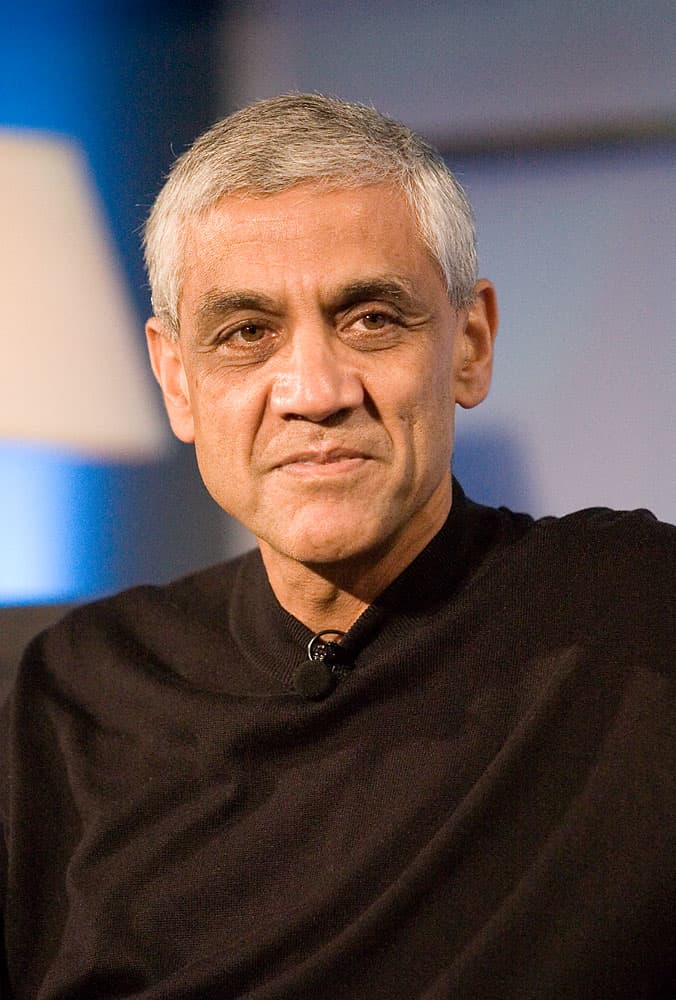
Image: James Duncan Davidson from For higher resulutions contact duncan@x180.net. | CC BY 2.0 | via Wikimedia Commons

Vinod Khosla

CEO, Sun Microsystems
UNITED STATES
Real-Time Net Worth
$13.232B
Estimated based on Sun Microsystems stock value as of April 20, 2026
0% (24h)
Age
71
Source
Sun Microsystems, venture capital
Industry
technology
Citizenship
UNITED STATES

Biography

Vinod Khosla is an American billionaire businessman and venture capitalist, renowned for co-founding Sun Microsystems and establishing Khosla Ventures. His career has been marked by significant achievements in the technology industry, from early investments in networking and software to pioneering efforts in alternative energy. Khosla's career began after reading about the founding of Intel at age 16, which inspired him to pursue a technology career. His net worth is estimated by Forbes at $13.4 billion as of January 2026.

Fact Checked
Verified by Editorial Team
Live Data
Updated 4/20/2026

Wealth Over Time

In-Depth Profile

Early Life and Education

Vinod Khosla was born in Pune, Maharashtra, India, on January 28, 1955. His father was an officer in the Indian Army. Khosla was inspired to pursue a career in technology after reading about the founding of Intel. He earned a bachelor's degree in electrical engineering from the Indian Institute of Technology (IIT) Delhi in 1976. He then pursued a Master of Science in biomedical engineering from Carnegie Mellon University and received his MBA from Stanford Graduate School of Business in 1980.

Rise to Success

After completing his MBA, Khosla co-founded Sun Microsystems in 1982 with Scott McNealy, Andy Bechtolsheim, and Bill Joy. He served as the first chairman and CEO of Sun Microsystems. Sun Microsystems developed the Java programming language. Khosla left Sun Microsystems in 1985. In 1986, he joined Kleiner Perkins Caufield & Byers (KPCB) as a general partner. While at KPCB, he made successful investments in companies like Nexgen, Juniper Networks, and Cerent Corporation. In 2004, he founded Khosla Ventures, where he focuses on investing in experimental technologies and providing venture assistance to entrepreneurs. Khosla Ventures was the first venture firm to invest in OpenAI.

Key Business Strategies

Khosla's business strategy is focused on identifying and investing in groundbreaking technologies with the potential for significant societal impact. He emphasizes long-term investments and has been an early investor in areas such as alternative energy, artificial intelligence, and fintech. Khosla has stated that he believes in finding big breakthroughs in "clean" energy rather than cutting back on energy consumption.

Philanthropy

Khosla is involved in philanthropy, supporting education and climate initiatives. His wife, Neeru Khosla, co-founded the CK-12 Foundation, which aims to develop open-source textbooks and lower the cost of education worldwide. Vinod and his wife have also donated to the Wikimedia Foundation.
Career Milestones

1976

Graduated from IIT Delhi

Received a bachelor's degree in electrical engineering from the Indian Institute of Technology Delhi.

1980

MBA from Stanford

Received an MBA from Stanford Graduate School of Business.

1982

Co-founded Sun Microsystems

Co-founded Sun Microsystems with Scott McNealy, Andy Bechtolsheim, and Bill Joy.

1986

Joined Kleiner Perkins Caufield & Byers

Became a general partner at Kleiner Perkins Caufield & Byers.

2004

Founded Khosla Ventures

Founded his own venture capital firm, Khosla Ventures.

Philanthropy & Social Impact

Education

CK-12 Foundation

Undisclosed

Co-founded with his wife Neeru Khosla, aims to develop open-source textbooks and lower the cost of education.

General Philanthropy

Wikimedia Foundation

$0.5B

Donated to the Wikimedia Foundation.

Business Philosophy & Leadership

Notable Quotes

"Success comes to those that dare to dream dreams and are foolish enough to try and make them come true."

"Any problem is an opportunity. The bigger the problem, the bigger the opportunity."

"I've probably failed more often than anybody else in Silicon Valley. Those don't matter. I don't remember the failures. You remember the big successes."

Leadership Principles

Embrace Failure

Khosla believes that failing often is a key part of the entrepreneurial process and encourages trying new things.

Focus on Impact

He emphasizes the importance of technology as a means to address significant societal problems.

Think Long-Term

He encourages entrepreneurs to build for the long term and adapt to changing market conditions.

Controversies & Challenges

2010

Martins Beach Dispute

Khosla faced a long-running legal battle over public access to Martins Beach, a stretch of coastline near Half Moon Bay that he purchased and restricted access to.