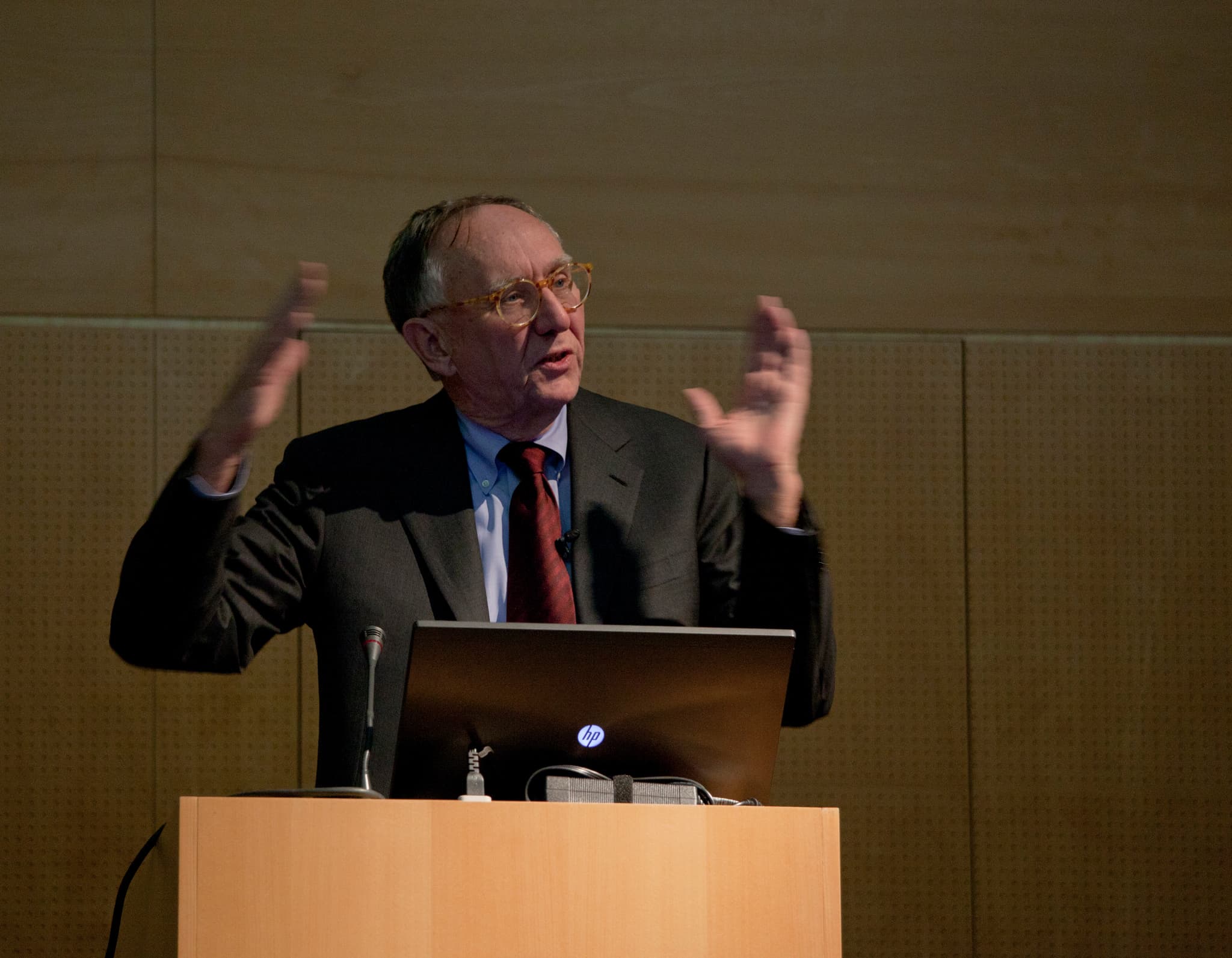
Early Life and Education
Born Paul Jacob Dangermond on July 23, 1945, in Loma Linda, California, Jack Dangermond grew up in Redlands, California. His parents, Dutch immigrants, owned a plant nursery, instilling in him an early appreciation for the environment and an entrepreneurial spirit. He graduated from Redlands High School in 1963 and pursued higher education in landscape architecture and urban planning. He earned a Bachelor of Science degree in landscape architecture from California State Polytechnic University, Pomona, a Master of Urban Planning from the University of Minnesota, and a Master of Landscape Architecture from Harvard University in 1969.
Rise to Success
Dangermond's career took off in 1969 when he co-founded Esri with his wife, Laura. The company started with a modest investment of $1,100. Esri initially focused on land-use analysis but soon transitioned to developing GIS software, a nascent field at the time. Under Dangermond's leadership, Esri introduced ARC/INFO in the early 1980s, one of the first GIS software systems that allowed users to create, analyze, and visualize geographic data. This pioneering work positioned Esri as a leader in the GIS industry, with its flagship product, ArcGIS, tracing its origins to Dangermond's initial efforts.
Key Business Strategies
Esri's success is rooted in Dangermond's vision of using geographic analysis and computer mapping to design a better future. The company has focused on long-term innovation and sustainability, investing heavily in research and development. Esri has maintained its position by not taking on outside investors, which allowed them to prioritize their mission over short-term financial gains. A key strategy has been providing accessible GIS technology to various organizations to improve decision-making across industries.
Philanthropy
Dangermond is known for his dedication to environmental conservation and philanthropy. He and his wife have made significant donations to various organizations and causes, including establishing the Jack and Laura Dangermond Preserve on the Pacific coast. They have also signed The Giving Pledge, committing to donate the majority of their wealth to charitable causes. In 2017, they made a gift of $165 million to The Nature Conservancy for the purchase of the Bixby Ranch, the largest single charitable donation ever received by the organization.