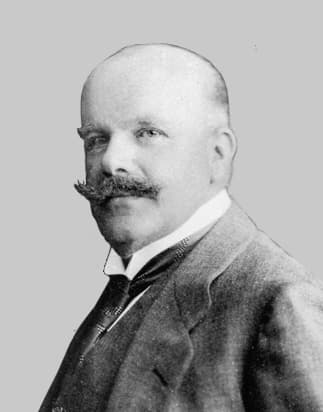
Early Life
Albert Boehringer was born on August 11, 1861, in Stuttgart, Germany. He trained in chemistry, including studies in Munich. His entrepreneurial spirit was evident early on, as he purchased a small tartar factory in Nieder-Ingelheim (now Ingelheim am Rhein) in 1885, laying the foundation for what would become a global pharmaceutical powerhouse.
Rise to Success
In 1885, Albert Boehringer founded C. H. Boehringer Sohn (later Boehringer Ingelheim) in Ingelheim am Rhein, Germany. The company initially produced tartaric acid salts, but Boehringer's innovation led to the industrial production of lactic acid through bacterial fermentation. This pioneering work in biotechnology set the stage for the company's expansion into pharmaceuticals. By 1912, the company launched its first pharmaceutical product, Laudanon, marking a significant move into the industry. During the First World War, Albert Boehringer ensured his employees continued to be paid and implemented a health insurance scheme for company staff.
Key Business Strategies
Boehringer's strategic vision included a commitment to research and development and a long-term focus, with the company reinvesting approximately 20-25% of its annual revenue into R&D. This approach fostered a pipeline-driven business model and led to groundbreaking innovation in human and animal health. The company's commitment to its employees and community was also a key factor in its success. By 1939, when Albert Boehringer died, the company had grown to employ 1,500 people.
Philanthropy
While specific amounts are not readily available, Boehringer Ingelheim is committed to corporate social responsibility, focusing on environmental protection and promoting health education. The company partners with universities, research organizations, and other companies to improve health.